
Find Yourself In Your Story
HIPAA-Compliant & Secure Virtual Therapy Available:
New York, Connecticut, Massachusetts, and Florida

The Role You Learned To Play
People-pleasing can look admirable from the outside.
You may be the dependable one. The thoughtful one. The person others can count on. You notice what people need, anticipate how they might feel, work hard to avoid disappointing them, and often go out of your way to keep relationships steady.
But over time, constantly orienting yourself around other people can become exhausting.
People-pleasing is more than simply being kind, generous, or considerate. It is a pattern in which another person’s comfort, approval, expectations, or emotional state begins to carry more weight than your own needs, preferences, limits, or feelings. Instead of asking, “What do I want?” or “What feels right for me?” the focus becomes, “What will keep others happy?” “How do I avoid upsetting them?” or “What do I need to do so they still see me as a good person?”
For many people, saying no does not simply feel uncomfortable. It can bring up guilt, anxiety, self-doubt, fear of rejection, or the sense that they have somehow done something wrong. Setting a boundary may feel selfish. Disagreeing may feel dangerous. Speaking up may go against the family norms. Expressing feelings or a different opinion may create an immediate urge to explain, soften, apologize, or take the statement back.
Over time, a person can become so skilled at reading everyone else that they lose touch with themselves.
When Everyone Else Comes First
At its core, people-pleasing often involves an excessive sense of responsibility for other people’s feelings, reactions, or perceptions. A person may find themselves thinking carefully about how something will be received before deciding what they actually want to say. Many people learned early in life that relationships felt safer when they were agreeable, compliant, high-achieving, undemanding, or attentive to the needs of others.
Perhaps disagreement led to anger, withdrawal, criticism, or tension. Maybe there was little room for your feelings. Perhaps a parent was unpredictable, emotionally overwhelmed, highly critical, controlling, or dependent on you in ways you did not fully understand at the time. Or maybe you simply learned that approval, affection, or connection came more easily when you were doing what was expected of you.
In those environments, paying close attention to other people can become a form of protection.
You learn to read the room.
You notice changes in tone and facial expressions.
You become highly sensitive to whether someone is upset with you.
And eventually, accommodation can begin to feel safer than authenticity.


Therapy is personal, and the right fit can make all the difference.
Learn more about who we are, how we work, and what you can expect when working with us.
A Different Way of Relating is Possible
People-pleasing can be difficult to change because, for many people, it is not simply a habit. It is a way of relating to others that has been practiced and reinforced over many years. You may already know that you need stronger boundaries or that you say yes too often. You may even recognize when you are doing it. The harder question is often why doing something different feels so uncomfortable. We can work through all this together.
Therapy at Daniels Psychotherapy can help you in the following ways:
Understand the origins of people-pleasing
Recognize people-pleasing as it happens
Identify your own needs & preferences rather than what others expect from you
Develop healthier boundaries and learn how to communicate limits clearly
Become more comfortable saying no
Separate empathy from responsibility
Build greater tolerance for conflict and disagreement
Strengthen trust in your own judgment
Communicate more directly and authentically
Reconnect with your sense of self and build an identity outside of others
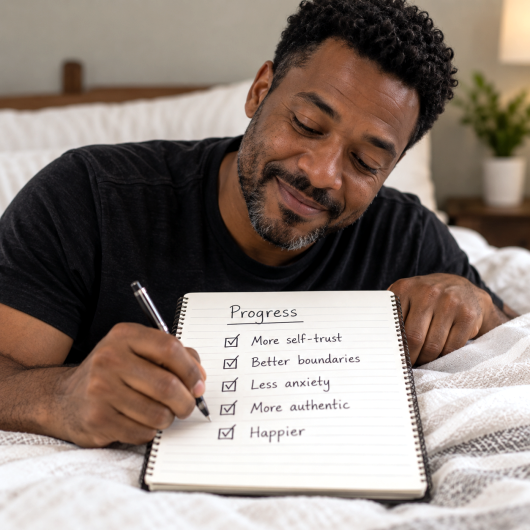
You have an important story to tell. We are ready and willing to hear it.
Your questions are welcome here.
Whether it’s about the process, what to expect, or even how to get started, we're available to talk it through with you.
We are happy to answer any question that helps you feel more confident about the journey ahead.
Let’s talk.
Clinical Insights, Personal Reflections
A curated collection of short clinical writings exploring the human experience through a therapeutic and narrative lens.